what radio button must be clicked for the edit case button to be displayed?
<input type="radio">
<input> elements of blazon radio are generally used in radio groups—collections of radio buttons describing a set of related options.
Just ane radio button in a given group can exist selected at the same time. Radio buttons are typically rendered as small circles, which are filled or highlighted when selected.
Try it
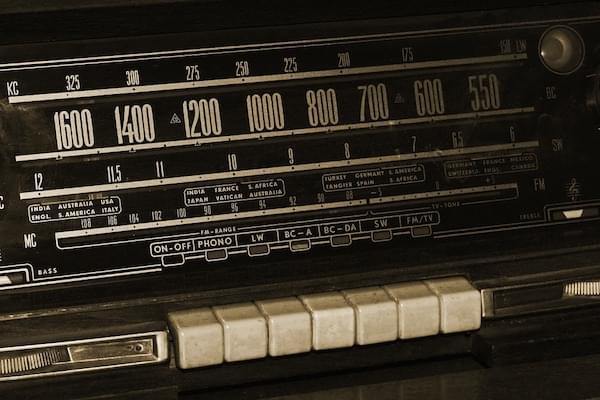
They are called radio buttons considering they expect and operate in a similar manner to the button buttons on former-fashioned radios, such every bit the ane shown below.
Note: Checkboxes are similar to radio buttons, just with an of import stardom: radio buttons are designed for selecting i value out of a set, whereas checkboxes let you turn individual values on and off. Where multiple controls be, radio buttons let one to be selected out of them all, whereas checkboxes allow multiple values to be selected.
Value
The value attribute is a DOMString containing the radio button'southward value. The value is never shown to the user by their user agent. Instead, information technology's used to identify which radio button in a group is selected.
Defining a radio group
A radio group is defined by giving each of radio buttons in the grouping the same name. One time a radio group is established, selecting any radio push in that group automatically deselects whatsoever currently-selected radio push in the same group.
You can accept as many radio groups on a page as you lot like, as long as each has its own unique proper noun.
For example, if your form needs to enquire the user for their preferred contact method, you might create three radio buttons, each with the name property prepare to contact simply i with the value electronic mail, i with the value phone, and 1 with the value mail. The user never sees the value or the proper noun (unless you expressly add together code to display it).
The resulting HTML looks like this:
<form > <p > Delight select your preferred contact method: </p > <div > <input type = "radio" id = "contactChoice1" name = "contact" value = "e-mail" > <characterization for = "contactChoice1" > Email </label > <input type = "radio" id = "contactChoice2" proper noun = "contact" value = "phone" > <label for = "contactChoice2" > Telephone </characterization > <input type = "radio" id = "contactChoice3" proper name = "contact" value = "mail service" > <label for = "contactChoice3" > Postal service </characterization > </div > <div > <button type = "submit" > Submit </button > </div > </form > Here you run into the three radio buttons, each with the proper name ready to contact and each with a unique value that uniquely identifies that private radio button within the group. They each too have a unique id, which is used by the <label> element'due south for attribute to associate the labels with the radio buttons.
You can endeavor out this example here:
Data representation of a radio grouping
When the above form is submitted with a radio push button selected, the class's data includes an entry in the form contact=value. For example, if the user clicks on the "Phone" radio button then submits the grade, the form'south data will include the line contact=phone.
If you lot omit the value attribute in the HTML, the submitted grade data assigns the value on to the group. In this scenario, if the user clicked on the "Telephone" option and submitted the form, the resulting form data would be contact=on, which isn't helpful. Then don't forget to set your value attributes!
Note: If no radio button is selected when the form is submitted, the radio group is not included in the submitted class information at all, since there is no value to report.
It's adequately uncommon to actually want to permit the form to exist submitted without any of the radio buttons in a grouping selected, so it is usually wise to have i default to the checked state. See Selecting a radio button past default below.
Permit's add a little bit of code to our example so we can examine the information generated past this class. The HTML is revised to add a <pre> cake to output the course data into:
<grade > <p > Please select your preferred contact method: </p > <div > <input type = "radio" id = "contactChoice1" name = "contact" value = "email" > <label for = "contactChoice1" > E-mail </label > <input type = "radio" id = "contactChoice2" proper name = "contact" value = "phone" > <label for = "contactChoice2" > Telephone </label > <input type = "radio" id = "contactChoice3" name = "contact" value = "mail" > <label for = "contactChoice3" > Mail service </label > </div > <div > <button type = "submit" > Submit </push button > </div > </form > <pre id = "log" > </pre > So nosotros add some JavaScript to gear up up an effect listener on the submit event, which is sent when the user clicks the "Submit" push:
var form = document. querySelector ( "form" ) ; var log = document. querySelector ( "#log" ) ; form. addEventListener ( "submit" , part ( result ) { var data = new FormData (class) ; var output = "" ; for ( const entry of information) { output = output + entry[ 0 ] + "=" + entry[ 1 ] + "\r" ; } ; log.innerText = output; outcome. preventDefault ( ) ; } , false ) ; Endeavor this example out and see how there's never more than i issue for the contact group.
Additional attributes
In improver to the mutual attributes shared past all <input> elements, radio inputs support the following attributes.
-
checked -
A Boolean attribute which, if present, indicates that this radio push button is the default selected ane in the group.
Different other browsers, Firefox past default persists the dynamic checked state of an
<input>beyond page loads. Use theautocompleteattribute to command this characteristic. -
value -
The
valueattribute is one which all<input>s share; however, it serves a special purpose for inputs of typeradio: when a form is submitted, just radio buttons which are currently checked are submitted to the server, and the reported value is the value of thevalueattribute. If thevalueis not otherwise specified, information technology is the cordonpast default. This is demonstrated in the section Value above.
Using radio inputs
We already covered the fundamentals of radio buttons to a higher place. Allow's at present look at the other mutual radio-push-related features and techniques you lot may need to know well-nigh.
Selecting a radio button by default
To make a radio button selected past default, you include checked attribute, equally shown in this revised version of the previous example:
<form > <p > Please select your preferred contact method: </p > <div > <input type = "radio" id = "contactChoice1" name = "contact" value = "email" checked > <label for = "contactChoice1" > Email </label > <input type = "radio" id = "contactChoice2" name = "contact" value = "phone" > <label for = "contactChoice2" > Phone </label > <input type = "radio" id = "contactChoice3" proper noun = "contact" value = "mail" > <label for = "contactChoice3" > Mail </characterization > </div > <div > <push button type = "submit" > Submit </button > </div > </form > In this example, the first radio button is now selected past default.
Notation: If you lot put the checked aspect on more than than i radio push button, later instances will override earlier ones; that is, the terminal checked radio button will exist the one that is selected. This is considering but one radio push in a group can ever exist selected at in one case, and the user agent automatically deselects others each time a new one is marked as checked.
Providing a bigger hit area for your radio buttons
In the above examples, you may accept noticed that you lot can select a radio button by clicking on its associated <label> element, as well as on the radio push itself. This is a really useful feature of HTML grade labels that makes information technology easier for users to click the pick they want, especially on small-screen devices like smartphones.
Across accessibility, this is another good reason to properly prepare <label> elements on your forms.
Validation
Radio buttons don't participate in constraint validation; they accept no real value to be constrained.
Styling radio inputs
The following example shows a slightly more thorough version of the example we've seen throughout the article, with some boosted styling, and with better semantics established through use of specialized elements. The HTML looks like this:
<form > <fieldset > <legend > Please select your preferred contact method: </legend > <div > <input blazon = "radio" id = "contactChoice1" proper name = "contact" value = "email" checked > <characterization for = "contactChoice1" > Email </label > <input blazon = "radio" id = "contactChoice2" proper name = "contact" value = "telephone" > <characterization for = "contactChoice2" > Phone </characterization > <input blazon = "radio" id = "contactChoice3" name = "contact" value = "mail" > <characterization for = "contactChoice3" > Mail </characterization > </div > <div > <push type = "submit" > Submit </push button > </div > </fieldset > </form > There's non much new to annotation here except for the addition of <fieldset> and <fable> elements, which assistance to group the functionality nicely and in a semantic way.
The CSS involved is a bit more pregnant:
html { font-family : sans-serif; } div:first-of-type { display : flex; align-items : flex-start; margin-bottom : 5px; } label { margin-correct : 15px; line-height : 32px; } input { -webkit-advent : none; -moz-advent : none; appearance : none; border-radius : 50%; width : 16px; height : 16px; edge : 2px solid #999; transition : 0.2s all linear; margin-right : 5px; position : relative; summit : 4px; } input:checked { edge : 6px solid black; } button, legend { color : white; background-color : black; padding : 5px 10px; border-radius : 0; edge : 0; font-size : 14px; } push:hover, push button:focus { colour : #999; } push:agile { background-color : white; color : black; outline : 1px solid black; } Most notable here is the use of the appearance holding (with prefixes needed to back up some browsers). By default, radio buttons (and checkboxes) are styled with the operating system's native styles for those controls. By specifying appearance: none, you can remove the native styling altogether, and create your ain styles for them. Here we've used a border along with edge-radius and a transition to create a nice animating radio selection. Notice also how the :checked pseudo-class is used to specify the styles for the radio button's appearance when selected.
Note: If you wish to use the advent holding, you should exam it very carefully. Although information technology is supported in most modernistic browsers, its implementation varies widely. In older browsers, even the keyword none does non have the same effect across different browsers, and some do non support information technology at all. The differences are smaller in the newest browsers.
Notice that when clicking on a radio button, there'southward a nice, smooth fade out/in effect equally the two buttons alter state. In addition, the manner and coloring of the fable and submit push are customized to take strong contrast. This might not be a expect you'd desire in a existent web application, but it definitely shows off the possibilities.
Specifications
| Specification |
|---|
| HTML Standard # radio-button-land-(type=radio) |
Browser compatibility
BCD tables merely load in the browser
Come across also
-
<input>and theHTMLInputElementinterface that implements information technology. -
RadioNodeList: the interface that describes a list of radio buttons - Compatibility of CSS backdrop
Source: https://developer.mozilla.org/en-US/docs/Web/HTML/Element/input/radio
0 Response to "what radio button must be clicked for the edit case button to be displayed?"
Post a Comment